Historic conservation and restoration at St John’s Church, Doddington, Clee Hill
When rusting iron cracks old stone: how we repaired the tracery window, mullions and cills on the Church on the Hill
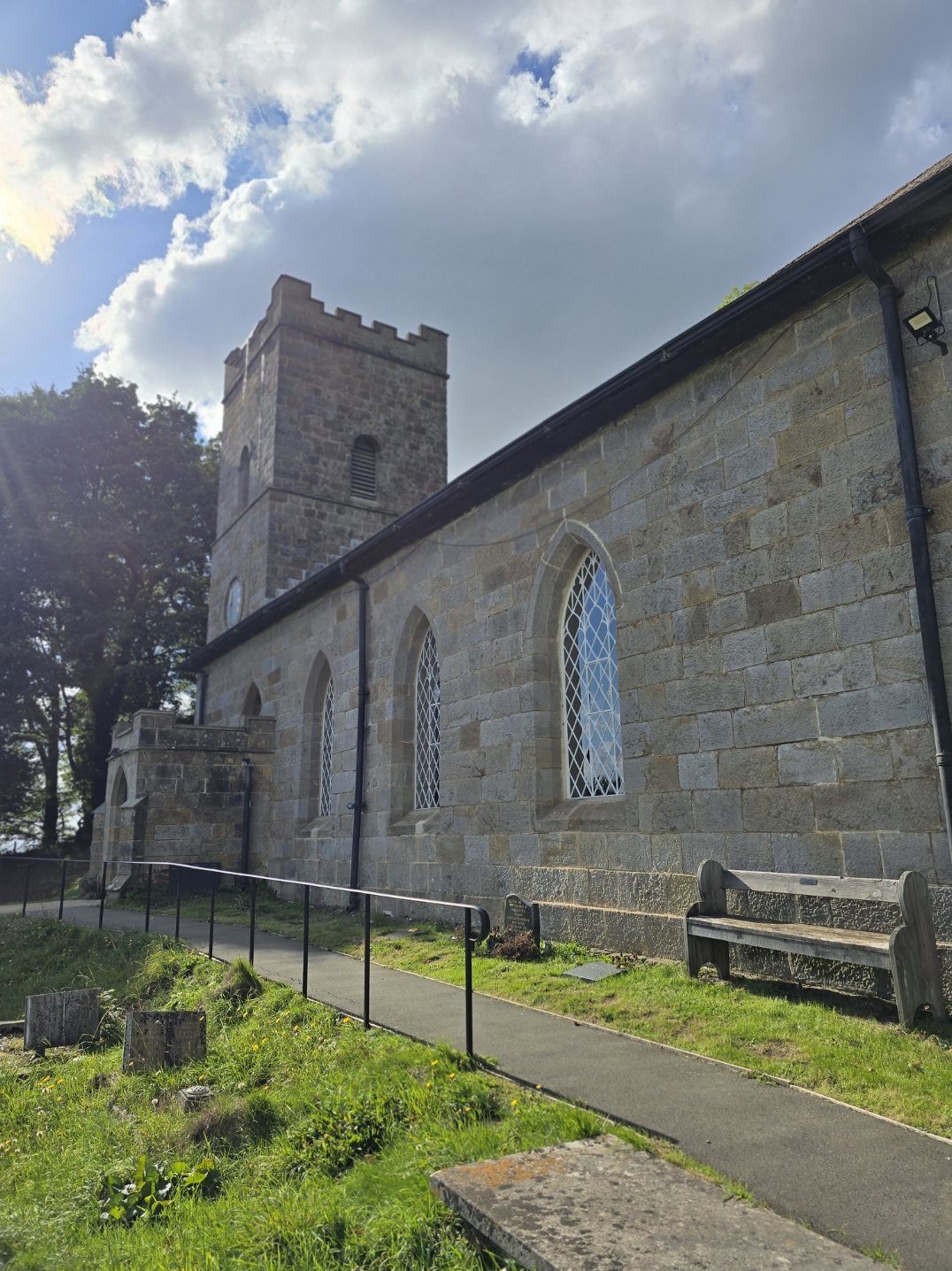
St John’s Church stands 1,000 feet up on the side of Titterstone Clee Hill in South Shropshire. Built in the 1840s for the quarrymen, miners and farmers who worked the hill, it is known locally as the Church on the Hill. We were contracted to carry out historic conservation and restoration work on its stonework as part of the Beacon on the Hill, the church’s project to repair the building and open it up as a heritage gateway to the Clee hills.
The problem: iron inside the stone
Much of the damage at St John’s had the same cause. Iron and steel were built into the stonework, in the fixings in the window cills and in the steels that hold the leaded lights of the tracery window. Over many years, with the weather this high up on the hill, that metal rusted. Rust takes up more room than the iron it comes from, so as it grows it pushes against the stone around it until the stone cracks.
It is one of the most common problems we see on historic buildings, and it is why we always look at what is causing the damage, not just the crack itself.
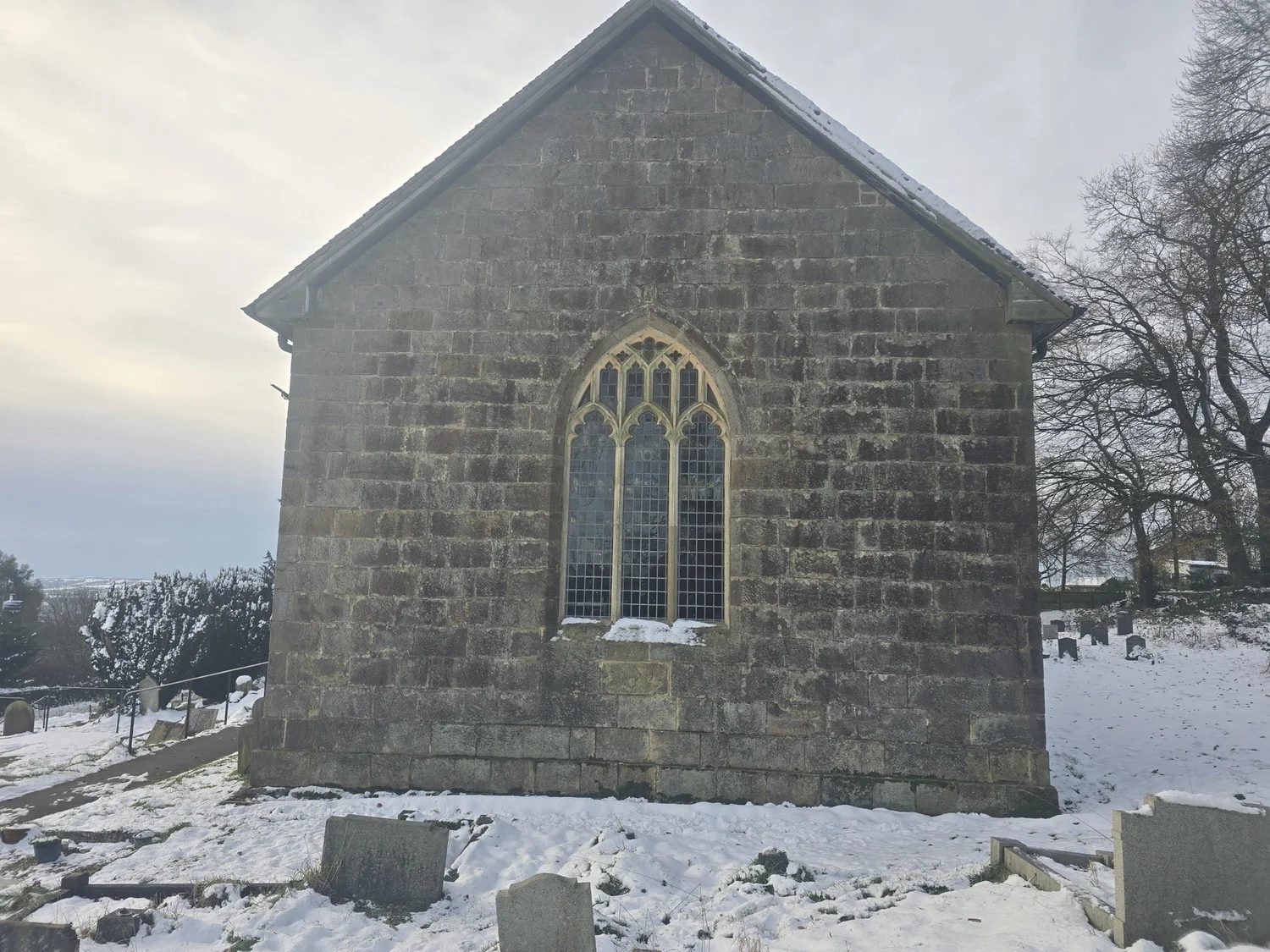
The west gable tracery window
The tracery window on the west-facing gable had suffered the most.
- Working alongside the glazier, we took out the tracery window steels that hold the leaded windows in place.
- New mullions and jambs were cut from Grinshill sandstone to replace the damaged ones.
- Parts of the trefoils, the three-lobed shapes in the tracery, had cracked badly where the old metalwork had corroded. We remade them in stone to match the originals.
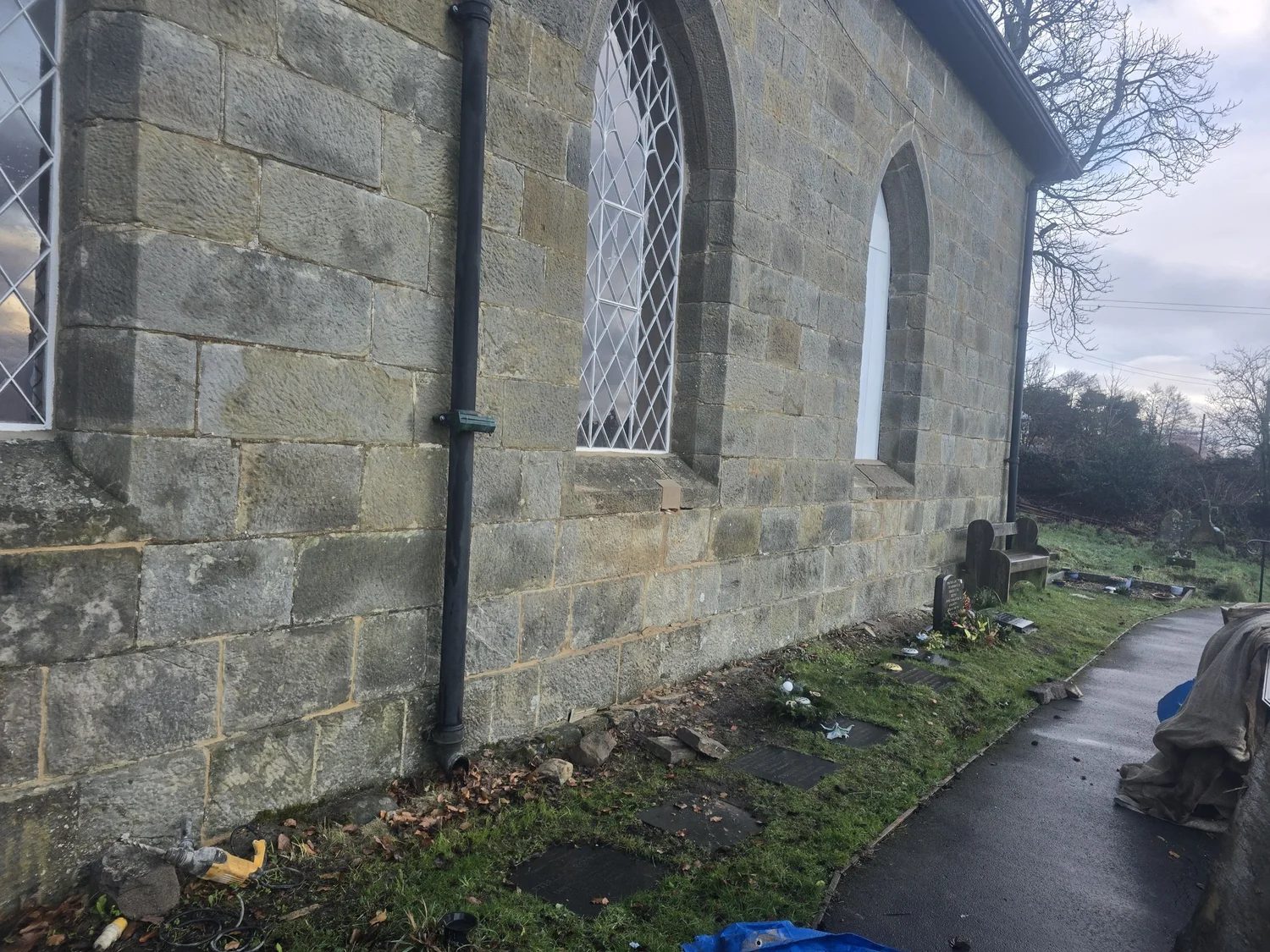
Indents to the window cills
Where steel fixings had cracked the window cills, we did not replace the whole cill. Instead we cut out only the damaged stone and pieced in new Grinshill sandstone, known as an indent. This keeps as much of the original stonework as possible, which is at the heart of good conservation.
Re-pointing in hot lime
We also re-pointed the lower ashlar stonework around the church. For this we used Cheshire premix hot lime from Tŷ-Mawr Lime. Lime mortar is softer and more breathable than cement, so moisture can escape through the joints rather than through the stone, which helps old stonework last. You can read more in our post on lime mortars.
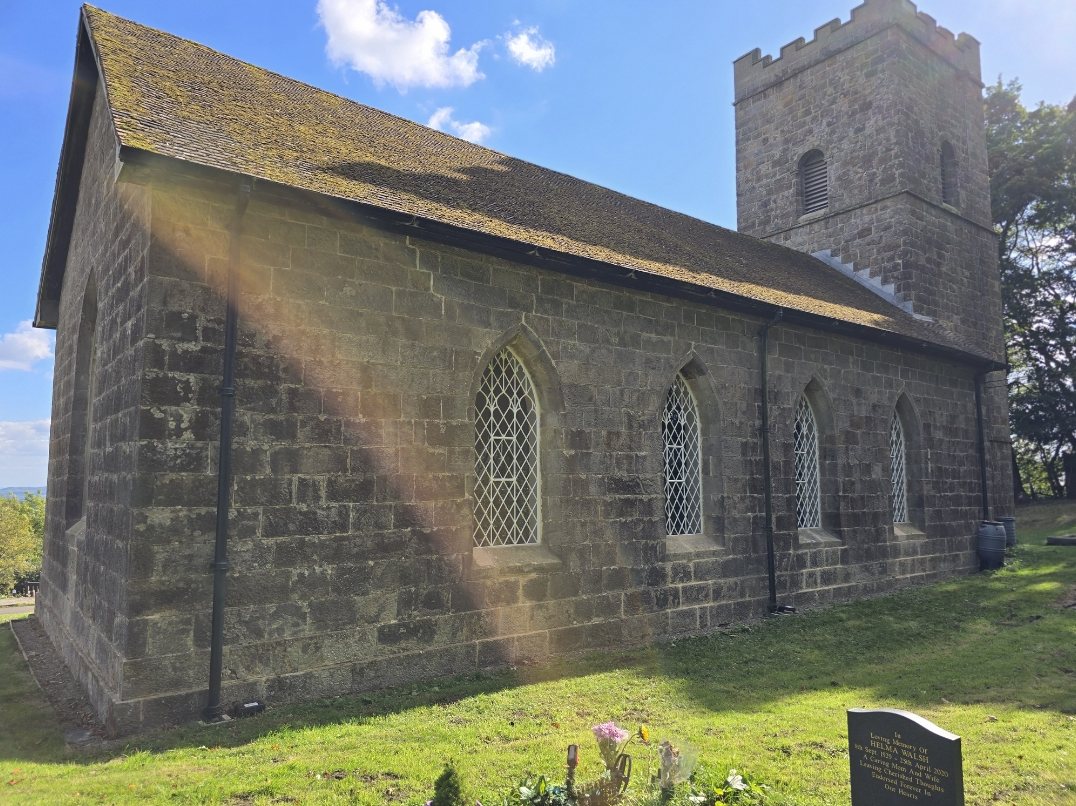
It was a privilege to work on such a special building. You can find out more about St John’s and the Beacon on the Hill on the church’s website, and see the full list of work in our St John’s Doddington case study.
If you look after a church, chapel or listed building, see our historic conservation and restoration work in Shropshire.
Stonework cracking on a church or historic building? We offer free advice and no obligation quotations across the UK.
Get a free quoteMore from the blog
- The Church of St Peter, Stanton Lacy, Ludlow, Shropshire · 30 January 2025
- Lime mortars explained · 11 October 2026